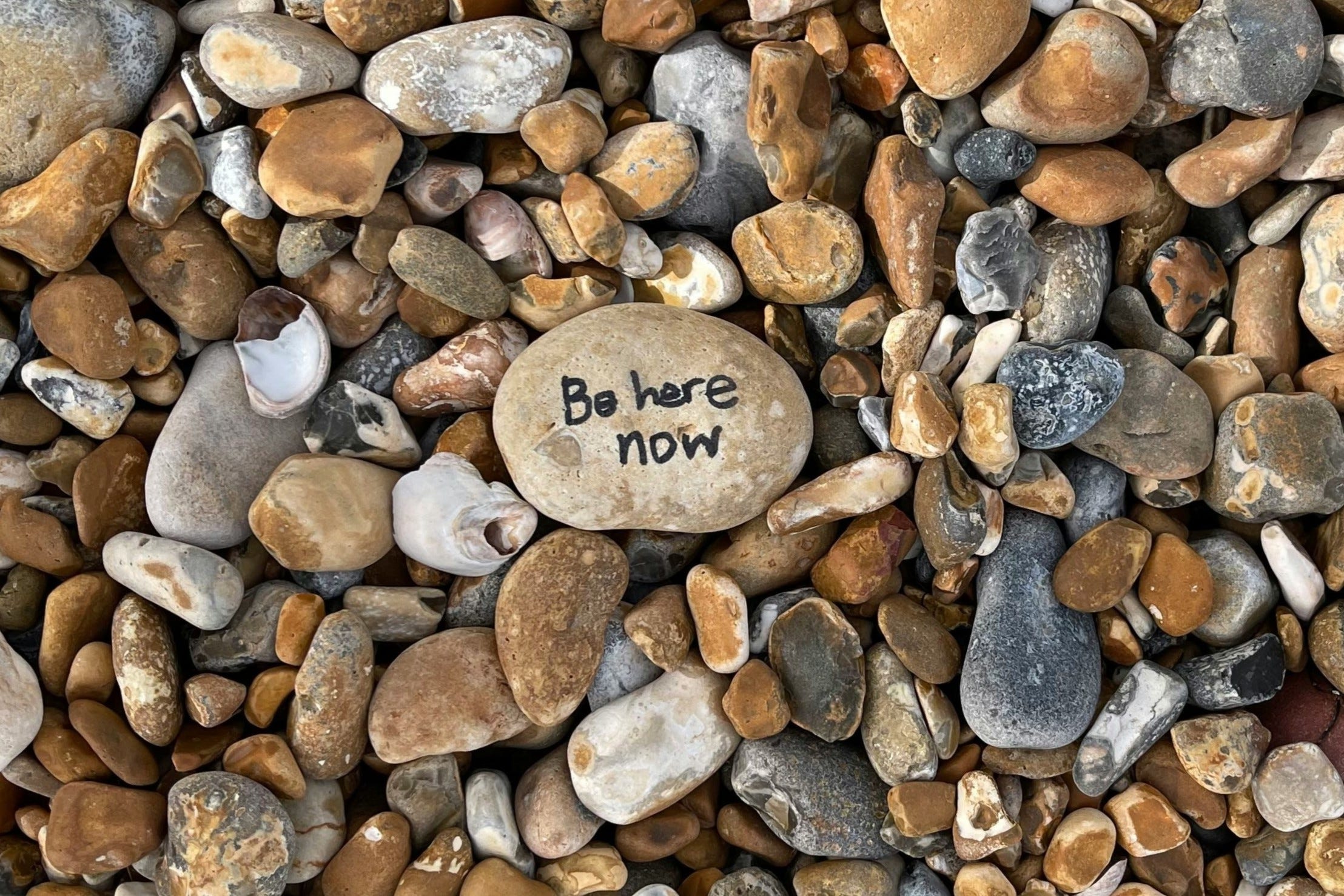
You are here
The Educationalist. By Alexandra Mihai

Welcome to a new issue of “The Educationalist”! Today I would like to bring up a topic that has been quite close to my heart lately: presence. Not mindfulness in the narrow sense, but presence as a quality of being fully engaged, attentive, and responsive. I want to apply this idea to the learning environment, as I feel we are often missing a great opportunity to use the classroom space to cultivate presence as a skill, an attitude and a state. Personally, I’ve come to realise that being fully present in the moment, with whatever I am doing, be it teaching, writing, cooking, walking or any other hobby, has a huge positive impact both on the quality of my experience (and often the result as well) and on my wellbeing. So I want to explore how we can bring this state into the classroom, and not (necessarily) by doing meditation, yoga or by banning electronic devices. Because I believe that time is a precious (scarce) resource and the least we could do is use the time in class by really being there, body and mind, fully committed to what is happening in the moment instead of reminiscing about the weekend or worrying about the exam next month. I hope you find some food for thought and maybe some ideas that resonate with you and that you could try with your students or, why not, in some other, (non-)educational contexts. Enjoy reading and have a nice end of the week!
“How we spend our days is, of course, how we spend our lives.”
Annie Dillard, “The Writing Life”
Think back to a moment when you left the classroom unsure whether learning did happen in that session. Feeling like the students were not really there, or they were restless or confused. Maybe it was a difficult or complex topic, maybe you had to rush through it, or maybe students just did not play along with the activities you prepared, despite your effort and good intentions. Now think back to a moment when you saw the spark of the “aha moment” in students’ eyes. When they were so fully immersed in an activity that they forgot to take a break. When you just could not stop them from debating the topic of the day.
Both are common scenarios. Learning with its ups and downs. The fact we do notice and remember those moments means we were actually fully present in the classroom. Because learning is not this huge, intangible thing. The thing we so carefully (think we) measure at the end of the course. Learning is what happens every day in class. Learning is what happens outside class (but I am not going to touch upon that here, as that is something outside our immediate grasp). Learning is made up of small moments, not grand designs. Blink, and you’ll miss them. Both as a teacher and as a student. Learning is a lived experience we are shaping and we are shaped by day by day. Not merely a checkbox or a rubric.
What is presence?
We often use the word “presence” simply to refer to whether a student is physically in class or absent. But formal attendance says very little about whether someone is truly present. Even in active learning environments such as Problem-Based Learning (PBL), where students are expected to constantly participate, presence is difficult to measure. Participation can easily become superficial - an act of counting how many times someone speaks rather than considering the quality of attention or engagement.
We tend to assume that if we are all in the classroom learning is happening automatically. Remember how this idea was challenged by the pandemic? How we tried to recreate and enact presence online and found it difficult? That was because we had never thought about what teacher and student presence are supposed to mean in the first place, we had just taken them for granted all along.
What I want to talk about here the deeper form of presence that shapes how we interact with others, both professionally and personally. Effective interaction requires intelligent spontaneity: the ability to listen carefully, adapt quickly, respond meaningfully, regulate emotions, and remain aware of ourselves and others. These are essential human skills, yet we rarely ask whether (and how) we can genuinely cultivate them in our classrooms.
Learning too often becomes transactional. Students complete required tasks, provide expected answers, engage in minimal discussion, receive grades, and move on to the next course. There is little active listening, little awareness, and little meaningful engagement. We often hear employers say that knowledge is not the problem — and increasingly, knowledge alone is no longer enough. What matters are the so-called “soft skills,” which are actually central human skills necessary for functioning in society (by calling them “soft” we are not doing them a favour, I think). I feel we are missing an important opportunity to use the classroom as a space to develop them.
Unpacking presence
Because I don’t want to talk about presence as an abstract concept, I think it’s useful to unpack it into several aspects which I think are more tangible and can act as a starting point for action:
Attention. I see this as an essential component of presence. Intentional attention is what allows us to truly perceive and learn. What we consciously direct our attention towards becomes visible to us. However, attention these days is constantly fragmented by distractions. In that sense, paying attention has become an act of rebellion. You can read some ideas on how to reclaim and train attention in the classroom here;
Connection. Genuine connection means more than asking and answering questions. It means actively listening, being curious about what the other person is saying, and responding meaningfully rather than automatically. Yet many students spend class looking at laptops rather than at one another. The solution is not necessarily removing technology, but designing activities that require eye contact, active listening, and authentic interaction;
Self-knowledge is another important aspect of presence. Students need opportunities to evaluate themselves honestly, to understand their strengths, limitations, and value. Education often relies heavily on external validation through grades, but if students lack an internal sense of self-assessment and self-worth, formal evaluation can become limiting or even harmful. We rarely teach students how to meaningfully evaluate their own learning;
Reflection is similarly important, though I’ve noticed lately that it has become rather superficial in many cases. Students tend to complete reflective assignments perfunctorily or even outsource reflection to GenAI. True reflection requires time, space, sometimes a bit of guidance and genuine engagement. Brief moments of collective or individual reflection during class may be far more powerful than written reflections completed mechanically at home;
Curiosity and creativity are also deeply connected to presence. When students are truly immersed in the classroom environment, they become curious- about each other, about themselves, about the topic and about the learning process itself. Curiosity creates the conditions for creativity, opening up our minds to new horizons that we are often unaware of. A bright idea can come from a spontaneous conversation in class, if we only allow ourselves to lift our eyes from our screens.
Learning as a lived experience
Learning happens when students are fully present in the moment: actively listening, responding, connecting new knowledge to prior knowledge, adapting spontaneously, and giving their full attention to the learning activities. Yet we often measure learning only through exams or written assignments rather than through what we observe unfolding in the classroom itself.
We often get frustrated when students seem distracted or disengaged, hiding behind their laptops or phones. Yet I believe the answer is not simply to eliminate distractions, as I discussed in my previous post. The real challenge is to create learning environments where students genuinely want to be present and understand why presence matters - not only for academic success, but for their ability to function and interact meaningfully in the world.
This requires a shift in focus from outcomes to processes. Learning is not something to be demonstrated only at the end of a course; it is something we can observe, support, and shape continuously, session by session and moment by moment.
Bringing presence to the classroom
Being truly present means engaging all of our senses. Too often, classrooms become rushed spaces focused on covering material rather than experiencing learning. We hurry through slides, activities, and assignments, losing touch with ourselves, with one another, and with the subject matter itself.
What we need instead is a pause- a recognition that the classroom is a shared human space. Presence means truly seeing and hearing one another, paying attention when someone speaks, responding thoughtfully, sensing the emotional atmosphere of the room, and developing awareness of the group dynamic. This is not something abstract; it is a fundamental prerequisite for meaningful learning.
As educators, we often feel constrained by content requirements, limited time, and established routines. Yet fostering presence does not necessarily require radical changes. Small interventions can make a big difference. What is important to remember is that this is only partly about design, and more about experience. Sometimes we simply need to pause and respond to what is happening in the room, rather than stick to rigid scripts and routines, however well they might have served us in the past. Here are some ideas, many of which came up by openly discussing with my students and colleagues:
Diverse learning activities. Try to use a mix of activities in the classroom, instead of repeating the same ones. Yes, consistency and expectation management are important, but when an activity becomes routine, students tend to engage with it superficially, thus defying the idea of presence. You can vary between tasks that require prior preparation and tasks that require them to act on the spot, spontaneously. Also, make sure you provide some opportunities for meaningful dialogue, where students can talk to each other (and not to their screens) and build on each other’s arguments;
Facilitation and guidance. Our role in training presence is crucial. We need to lead by example, by being there ourselves, fully, at any moment. In fact I must say teaching is one of my most mindful activities, which I really appreciate. Our role, the way I see it, consists of clear signposting (the “you are here” pin on the course map) and making sure all students follow the storyline, as well as trying to bring them back after moments of distraction, daydreaming or confusion. But we can also sometimes add some surprises, like a change of pace, a tweak in an activity, something they did not see coming (of course without affecting the learning objectives of the class). Try this and see if they notice and how they react to it, and then have a quick discussion about it;
Pace and sequencing. Even though we often think that “content is king”, the reality is that the way a learning experience is designed and experienced is at least equally, if not more, important. To train presence, I suggest being intentional about how we sequence learning activities, adding breaks between them, as well as moments of silence to provide time and space for genuine reflection. When possible, adopting a slower pace can allow us, students and teachers, to stay with a question or a topic longer, immersing ourselves in it rather than searching for a quick easy answer and moving on.
Presence is also deeply connected to wellbeing. The illusion of multitasking and constant partial attention leaves students disconnected and ineffective. Helping them become fully present is therefore not just an educational goal, but a human one. This does not necessarily mean formal mindfulness exercises, although those can help. More importantly, it means embedding small practices and habits into the structure of learning itself: repeated opportunities for attention, reflection, listening, connection, and curiosity. Over time, these small changes can transform the quality of what happens in the classroom and hopefully help students understand why they are there in the first place.
Resources
The Community of Inquiry (CoI) Framework, by Garrison, Anderson & Archer
How We Spend Our Days Is How We Spend Our Lives: Annie Dillard on Choosing Presence Over Productivity, by Maria Popova
Why a Simple Pause at the End of Class Is So Powerful, by Gail Taylor Rice